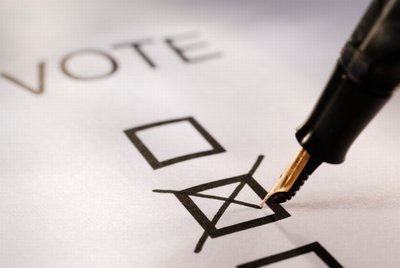
 Quite recently, in a open committee debate from the Youth Affairs Committee, I was one of the fortunate selection of young people in our generation to voice our responses to the very likely prospect of an extension in the voting franchise to people at 16. Sat on the long terminal of desks facing the main curve of young people, MPs and Lords altogether, it was already evident that this subject was already in the consciousness of young people who are equally politically engaged and just have much as a right now to exercise an informed opinion - unsurprisingly - on a general consensus that the franchise should be expanded for those finishing their GCSEs - or the English Baccalaureate as it will soon be known as. It was hard to believe that 1928 was our last reform of this system, when women's suffrage finally triumphed and they were given just equal rights as men. However, representing Dorset Youth Association that evening, I was one of the very few to express why a new legislation (perhaps post-2015) should be passed and it is only right that this dissenting group, though maybe on the wrong side of history, are as valid and as justified in protesting against the seemingly obvious law that for a particular reason has not even been passed to this day.
The day which the debate was hosted - 21st November - was perhaps meaningful for many students in more ways than this single issue. As it was, we were to clash with a mass NUS demonstration in London on the discontent that has haunted us young people since the very days of those shameful acts inside Conservative HQ in 2010 that have done the cause more harm than good since. The prospect of a system that already conforms generally to the successes of the three mainstream UK parties, and where already we have a cross demographic section of voters who are deeply disillusioned with the system as it witnesses the repercussions of the bleak mid-term government who really is cutting in deeper, is a bleak forecast for what's to come in 2015 in relation to Obama's sombre re-election last month. With expenses getting higher and fees not going anywhere soon, it seems to be a vain hope that we should see another one of the Coalition's self-styled U-Turns on this issue anytime soon. If we were to grant those at 16 to have the same right, as is the case with the Scottish Referendum in 2014, will they even make the effort to put a cross in a ballot, let alone enter a polling station? One particular survey suggested that 21% of young people would 'have better things to do' than vote for a standing candidate and even then, can they have the wisdom to make a rational and measured decision in place of a resentful protest vote of a fringe party. More often than not, a protest vote is bitterness rather than policy based scenario and does not bode well for a community to be in such a state. One only has to look at the by-election in Middlesbrough this week to notice that the 26% turn-out is symptomatic not only of young people less than concerned in one-off elections, but also of an issue that is perhaps just as out of touch with the public in general for the moment as was the Lords Reform.
 |
| Me (second on with the scarf) with a selection of vInspired YAB and politicians. |
Another implication that deeply troubled me during this debate was that of, in the words of pro-16 Tory peer Lord Lucas, was the vote in which 'to just get it done' and brace yourselves for the consequences rather than have the knowledge of political agendas before making your fateful cross. Naturally, it would be a hard business for people to pour over manifestos without a feeling of complete boredom, but what do we regard those people who don't yet even have their first real qualifications. Yes, they can buy their lottery ticket, consent to sex and even marriage if their parents let it be so, but how politicised do we want our aware generation to be? Ignorance is not by any means bliss, but at the same time the world of politics is as stimulating as it is cynical and as important as it is dull for many. Can the thought of a general election in May/June be as equally regarded as the final exams for further generations? And with the shift to one last three hour paper in place of individual exams and coursework in-between, the choice between a red or blue rosette is less than likely to count. In the results of 18-24 year olds who had votes in the 2010 election, less than half had made their voice heard compared to the 63% who turned out overall. It is a humiliating waste of democracy when people are so scornful of these rights when so many countries are so distant from this prospect that the very idea of extending that possibility over to a 16 year old, who is more fraught with nerves about his/her exam than a sheet of paper, is a concept of the most foolhardy.
So what can be done? Well, start off with what can be done to interest young people besides that of issues which may not be of concern or a concept which does not fit within their bracket e.g. childcare, the EU and taxes for the wealthy. Campaigns on youth elections, as shown by Facebook and text messaging have had an enormous impact to which the young could respond to problems that most affected them without being burdened by the sheer weight of a national election. Rather than simply hand that right on a plate, nurture their interests, specialise in what most affects them and how politics can work in government when more often than not times will get tough after the honeymoon of an election. If votes at 16 must really be a topic worth discussing, put it in the media sphere and see how people outside the attractive age demogarphic will react. Make it worth discussing now, than simply being another crime commissioner debacle.

No comments:
Post a Comment