- "...rulers and people alike profoundly believed the church possessed the power of the keys."
- "The world might have a purpose, but purposes could no longer enter into scientific explanation."
After weeks (well, I say weeks) of speculation, the Renaissance finally produces its most significant line of figures in scientific rebirth. Alongside grim debates of tyranny, absolute monarchies and the "dog-eat-dog" world of the state of nature, the rationality of the laws of motion and astronomy allowed the first real debate of humans challenging the status-quo.
In addition to the first sign of a genuine breakaway from religion crossing into the domain of science, I will add this quote from Russell as more of a reason to think Plato and Aristotle completely mad as they were:
"There might still seem to be need of God to set the mechanism working; but the planets...everything went on without further need of divine intervention."
And thus, the keys of the power of the church were rightfully handed over, as the quotation implies above.
The Five Figures
- Francis Bacon
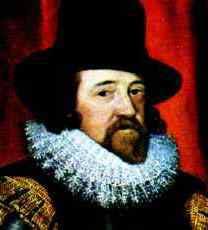 The real "maverick" of the scientific world of his day. Critical of the hypothetical world philosophy that was created had restricted the real observational views in which science nowadays is focused upon. Though religion had is place, he was similar to a Machiavellian way of thinking which the church was a structure of peaceful co-existence,and that the "triumph of faith" was more dangerous to science then could be estimated.
 A denounced member of the royal court, Bacon's theories upon "induction" and the New Organon have perhaps shaped the way in which scientists can now stand and resist the religious opposition of subjects such as stem-cell research etc. Science and secularism had the knowledge and force to combat religious dogma. Using his famous analogy that humans should be bees and bearing in mind knowledge is power, we should "collect and arrange" rather than simply "Idols of the theatre", like Aristotle.
2. Copernicus
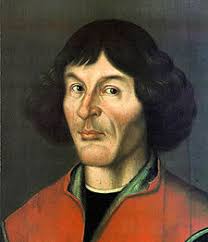 Perhaps the first figure to demolish Aristotle's "earth is the centre of the universe" nonsense, Copernicus observed perhaps wrongly that the sun dictates the centers of where particular planets exist. The earth also had a "diurnal rotation" and an "annual revolution". The former being I believe daily rotation. This had ridden the world essentially of the Ptolemy system with the sun revolving around the earth. But surprise, surprise, this was challenged by subjective and skeptical learners. One said "The fool wishes to reverse the entire science of astronomy...Joshua commanded the sun to stand still, and not the earth." Copernicus was discredited for years to come, but unlike Galileo's fate, he dedicated his text to the Pope and thus escaped persecution.
3. Kepler
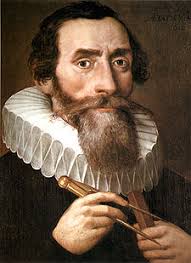 A strong believer of Copernicus's former beliefs, he found that Mars, and then other planets, could sweep the the sun in equal times according to its proportion. Quite simply, as the devise of the heliocentric theory, the earth was found to travel around the sun in accordance to how distant it was. Te further, the slower and vice-versa.However, his system of epicycles (which is a small curve around a larger planet) found that much still had to be proven.
4. Galileo
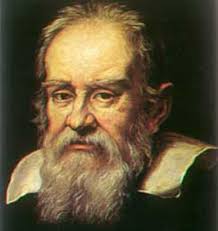 The perfecter of the telescope and the founder of terminal velocity, coming to Newton's law of inertia later. Galileo discovered that the four moons of Jupiter defied everything that was sacred of the laws of the seven planets. Seven itself being a significant number on the Christian perspective, whereas eleven was not. The telescope revolutionised the way in which people observed galaxies and the universe for centuries to come and the tragedy of Galileo's Inquisition in 1633 was that, like Socrates, there was much mire to come if he had not been silenced.
Just quickly, Locke found that the concept of innate ideas itself was absurd. On account of this evidence, I am inclined to agree.
5. Newton
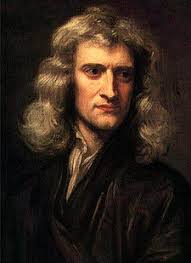 Yes, the man who had an apple fall on his head! But, seriously, Newton's Pricipala did change the ways in which the world did perceive force. Elliptical orbits and Halley's Comet are just some of the existing names which exist today thanks to Newton. With "Force" (now formulae) determined the magnitude or direction which planets traveled. Despite Newton's fanciful ideas of a "big bang" style of universal creation, he did find out that the solar system's momentum was dictated only by its own forces. The world had its own sense of order and the Clockwork Universe was born. Science had changed man's place at the universe, and he was now the centre of it...

No comments:
Post a Comment