
Firstly, and a tragic story which I remembered acutely, despite my young age, was that of the War Correspondent for ITN, Terry Lloyd. Lloyd, who worked for the organisation since 1983, was one of the first so-called 'friendly fire' casualties in the early days of the Iraq war in 2003. A seasoned journalist, known for his experiences in the Cambodian conflict, Kosovo during the Balkan Wars and, rather ironically, the Gulf War from the early 1990s where Saddam Hussein had first attacked Kuwait and the Kurds. His death alone was a great loss, and even more still when he, and his crew where his interpreter, Hussein Osman, also died, was a victim of bloodthirsty and aggressive allied troops from the US from his death in Basra. Indeed, it may perhaps seem all the more strange considering these people were unlikely to be armed and a passive crew to be suddenly propelled with bullets and, even to this day, one of the bodies remains uncounted for. According to the Crown Prosecution Service, after an inquiry into his killing in 2008, said "we have decided there is insufficient evidence for prosecution" (after both US and UK evidence was compiled together. Understandably, the NUJ and the ITV News editor were not pleased with the decision, even after Lloyd's death had been declared unlawful back in 2006. Interestingly, a journalist's death is not legally declared a War Crime and with 16 marines from the US who were officially linked to this incident, it seems the US Justice Department has escaped yet another embarrassing case where more rogue solders take shortcuts through justice. As if Guantanamo and Vietnam weren't enough...
Perhaps the most mysterious and enigmatic of all deaths was that of Russian journalist, Anna Politkovskya. Politkovskya worked for one of the last independent Russian newspapers that had no source of influence under either Putin, then and soon again to be President of Russia, or the Kremlin, Novaya Gazeta. Her most defining period as a journalist was when she ventured into the war-bitten region of Chechnya, which over the years since 1992-2009 (officially) had seen a tussle between the natives and Russian forces trying to reclaim and subdue the troublesome region. Crimes on both sides of Russians and the Chechen rebels prevailed and one of the worst crimes in this affair was the slaughter in that of a primary school in Belsan, of North Ossetia, and where 333 children, teachers and parents were killed, which due to a blundering operation by the FSB - Russian 'security service' - to save the group had ended in this mass murder. Politkovskya was trying to draw back a former leader of the country for more stable negotiations, but was badly poisoned by a drink possibly given by following FSB members and was never able to put into action her more diplomatic methods. The officer who led the operations for Russia was later awarded the role of general for his actions. Politkovskya was a firm critic of Putin's regime in Russia and one of her many published books was titled Putin's Russia, she observed "I dislike him for a matter-of-factness worse than felony, for his cynicism, for his racism, for his lies..." Though the Kremlin have claimed her journalism did in no way destabilise the government, much of her work was published in the outside world and became a real thorn in the side of this government. She paid the price. In September 2006, Politvoskya was shot by a man who was hidden in a baseball cap as she returned to her flat. Coincidentally it was Putin's birthday, 7th October 2006 and to date, no criminal convictions or resolution has yet been found. Today, Putin remains secure in his power (though now shaken) and Chechnya guided under the 'iron fist' of the son of a former dictator of the region, Ramzan Kydrov. On her job, Politkovskya accepted before her death "Risk is a usual part of my job."

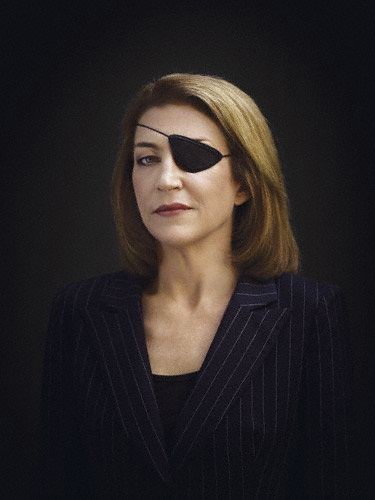 And there it is. If there can be any running these largely unfortunate stories, it is that punishment is few and far between and the only justice comes through that is what people really know rather than what groups, or even states, would like people to know. Although journalists themselves have the blood instinct to even enter countries in such a state and even those most cruel could say that they alone are to blame. But would we be better off in a world of ignorance and bliss? As Colvin, in her last ever report in Syria days before her death, she concluded with a feeling which many of the citizens must have, but in respect of these journalists also now "Why have we been abandoned by the world?"

No comments:
Post a Comment